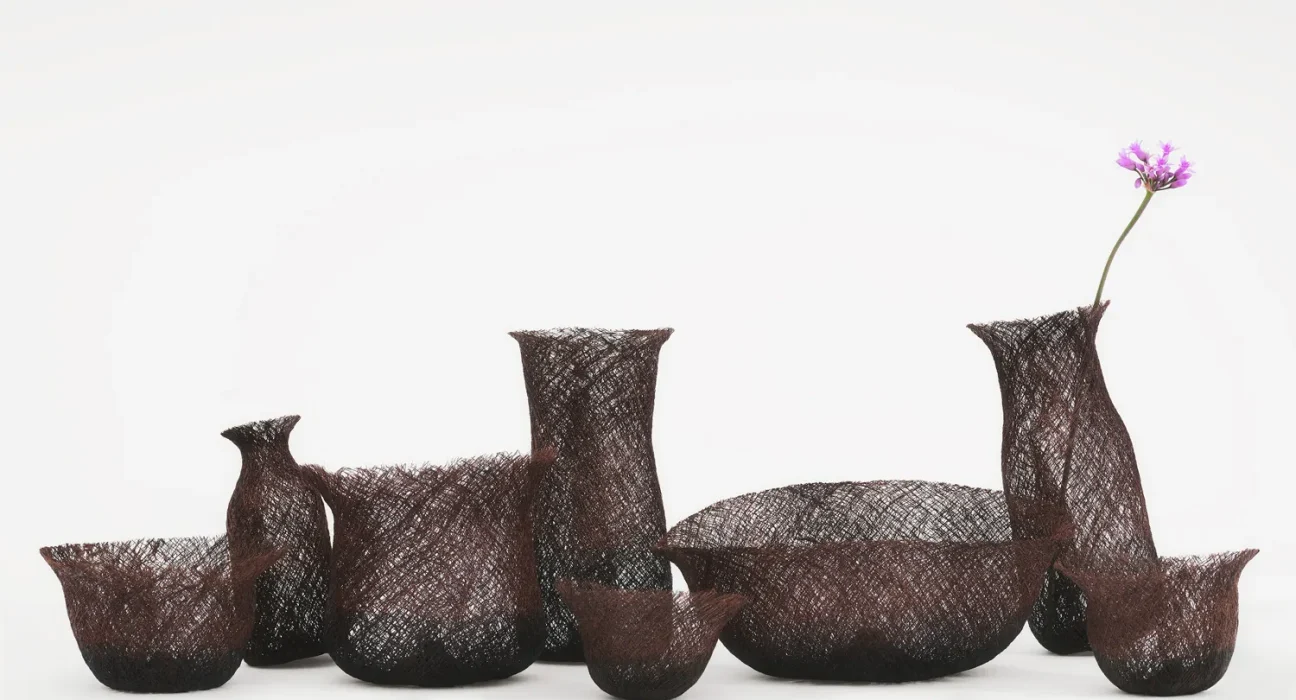
For centuries, the fibrous bark of the shuro palm has been a humble but essential material in Japan. Craftspeople wove it into brooms, brushes, ropes, and nets. The fibres were prized for their strength and durability, not for beauty or subtlety. Now, a young Tokyo designer is giving the material a very different life.
Kazuki Nagasawa, founder of the Super Rat studio, has taken the traditional shuro bark and turned it into light, translucent objects that seem to float between craft and sculpture. His Utsuwa-Juhi series of vases, created from semi-transparent expanses of juhi bark, strips away the material’s usual utilitarian context and shows what happens when craft knowledge meets contemporary design thinking.
Tradition and reinvention
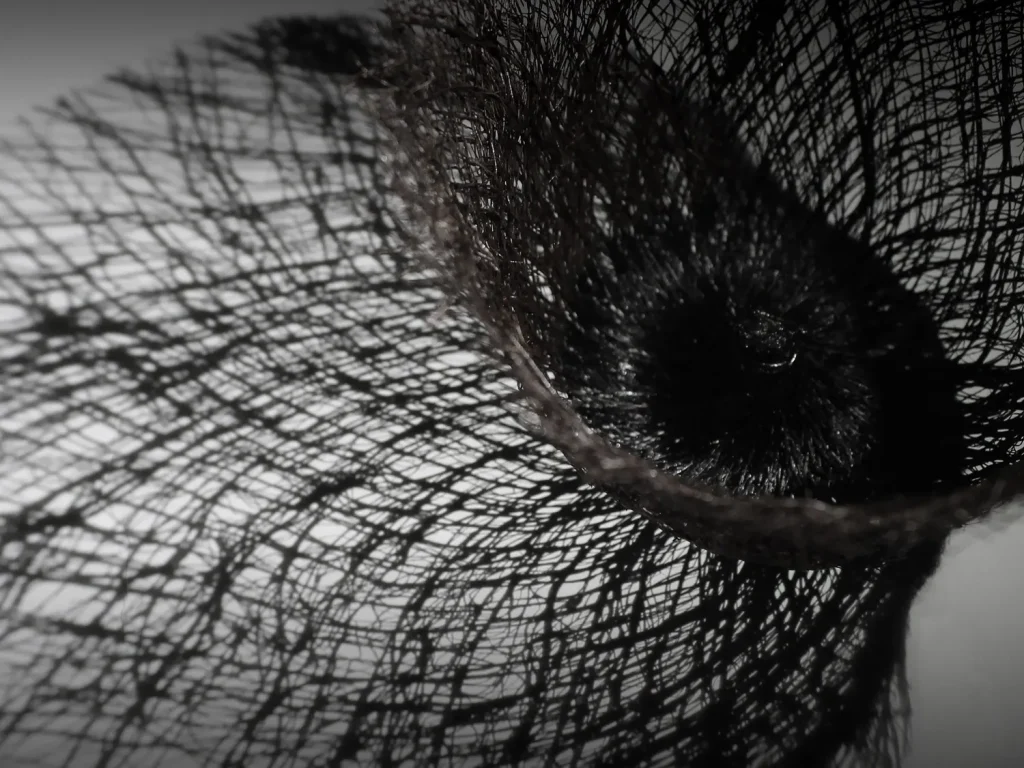
The first thing to know about Nagasawa’s work is that it respects the lineage of craft even as it changes the conversation. He sources juhi bark that has been processed using techniques known to regional artisans. Rather than replace that knowledge, he works with it, experimenting with how the fibres can be pressed, layered, and moulded to let light pass through.
The effect is surprising. What once read as rough and brown becomes fragile and luminous. The vases are not transparent in a glass sense. Instead, they filter and diffuse light, creating soft shadows and a sense of depth that feels almost fabric-like. Visitors to Milan Design Week noted how the pieces sit quietly in a room, both familiar and unfamiliar at once.
A practical ecology
Part of the appeal of Nagasawa’s project is its clear relation to sustainability. Shuro is a natural, locally available fibre. Using it thoughtfully can reduce dependence on synthetic materials and long supply chains. Nagasawa’s approach is not marketing dressed as design. It is a practical investigation into how existing materials can be coaxed into new roles.
That said, the work is not naive. Turning an artisanal material into delicate, sculptural objects requires technical problem-solving. Nagasawa and his studio have refined pressing and curing methods so the finished pieces are stable and durable. The process sits between studio craft and material science, which is precisely where many meaningful design innovations start.
Craft, context, and recognition
Nagasawa’s Utsuwa-Juhi series won attention at Salone del Mobile and earned him the SaloneSatellite Award for young designers. The accolade matters because it puts a spotlight on approaches to design that value lineage and material intelligence over novelty for its own sake.
The beauty of structure and restraints
At its heart, Nagasawa’s work is a study of control and transformation. The juhi bark is pushed just far enough to reveal its potential without losing its natural essence. The way light passes through, the quiet rhythm of layers, and the soft curvature of each form speak of patience and precision. The design is not loud or ornamental. It is thoughtful, balanced, and deeply considered.
Rather than compete with modern materials, Nagasawa allows shuro to express itself through form and process. The outcome is not simply decorative, but architectural in its thinking. Each vase behaves like a small structure, holding tension between surface, volume, and transparency. This restraint gives the work its quiet strength and positions Nagasawa as one of Japan’s most compelling young voices in material design.
Images courtesy of SUPER RAT.